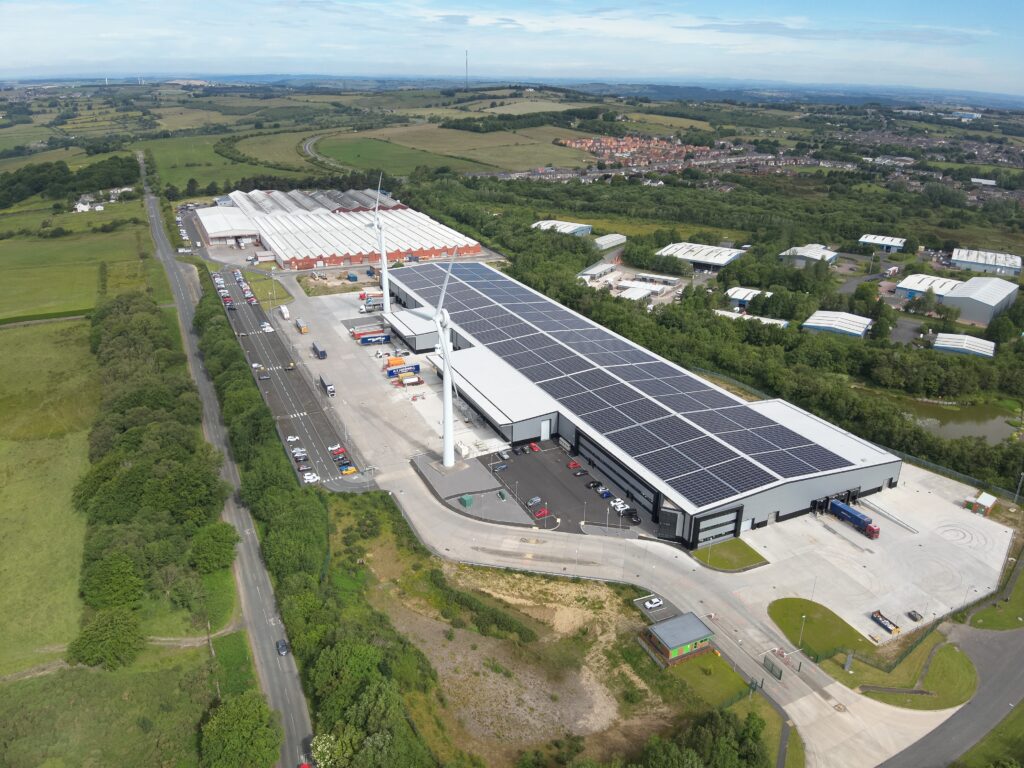
The Lanchester Group is a collection of businesses under common ownership of the Cleary Family. The businesses include Lanchester Wines, a wine importer and merchant; Greencroft Bottling, a contract wine bottler; Spicers of Hythe, a gift hamper business; Bon Bon’s, luxury confectionery; Full Circle Brew Co craft brewery and tap room. In total, The Lanchester Group operates over 1 million ft2 of warehouse, most of which is class A bonded and AEO-certified.
We have won many awards for our sustainability, including the covered IWSC (International Wine and Spirits Competition) Green Wine Initiative for two years running, the Drinks Business Green Award for Green Importer and Distributor of the Year, LDC Top 50 Inspiring Leaders ESG Award, NECC Green Business of the Year, Gateshead Awards’ Tackling Climate Change award, to name a few.
What sustainability measures have you implemented in your operations?
We believe every business has a duty of care to minimise its impact on the environment, and have worked tirelessly over the last decade to ensure sustainability is at our core. However, there is no ‘one size fits all’ solution when it comes to sustainability and so we’ve invested considerably to identify which changes we can make to lessen our effect on our planet.
Our business’ greatest opportunity to make a change is through minimising our reliance on fossil fuels. As such, we’ve invested over £13million in renewable heat and energy generation at our sites across the North of England and today our business is powered almost completely by renewable wind and solar energy.
In total, The Lanchester Group’s renewable investments will prevent over 100 million kg of CO2 emissions over their lifetimes. For comparison, an average household in the UK generates about 500kg of CO2 each year from its grid electricity usage meaning we save enough carbon for around 200,000 UK homes.
- Greencroft Two’s 3mW solar array produces approximately half of the above energy again, generating around 2.8 million kWh and saving about 20million kg of CO2 over its 35-year lifespan.
- Wind turbines – our three turbines combined can generate around 5milion kWh per year which offsets at least 1,000,000kg of CO2 per year. We saw payback in less than 2 years due to sizing the turbines correctly and utilising the power generated.
- Over their estimated 25-year lifespan, will, combined, prevent the production of approximately 25 million kg of CO2 compared to using grid electricity. For comparison, the UK average CO2 emissions are about 10 tonnes CO2 per person per year.[i]
- Geothermal heat pumps – space heating carbon footprint reduced by 80%. Our two Gateshead warehouses each house open loop water source heat pumps which use geothermally heated water in disused mine-workings below the buildings to generate heat. Our two heat pumps have reduced our space heating carbon footprint from 3,600 tonnes to 750 tonnes over several heating seasons.
- Solar, in addition to Greencroft Two:
- Bon Bon’s 221kW solar roof will generate over 200,000kWh per year saving ~40,000kg of CO2. Payback is currently estimated at 3.7 years
- Lanchester Wines’ offices have a 42kW solar array on the roof which generates electricity to power on-site office functions
- A battery energy storage system (BESS) will be installed at Greencroft Two, capturing our renewable energy and maximising its use in our building and processes. This BESS will enable the site to stay completely off-grid for weeks, potentially even months.
- LED Movement Sensor Lighting – saves £95,000 / 80,000kg CO2 per year Unit 2 LED switch cost £21k. Saving us ~10,000kWh per month, equal to savings of £26,672 per annum or ~25,000kg of CO2Unit 4 LED switch cost £10k. saves ~4,000kWh per month, equal to savings of £10,668 per annum or ~ 10,000kg of CO2
- We are currently trialling new sustainable tyres for our FLTs and are the first business in the UK to use these market-leading tyres which are made from recycled material. We’re now one month into the trial, with our findings being fed back to the company for ongoing product development.
What challenges do you face in adopting greener practices?
Over the last two or three years, we’ve had the privilege of receiving numerous awards for our sustainability efforts and are proud to be recognised as “Pioneers in Sustainability”. We’ve advised many businesses on this important issue and I’ve had the opportunity to share our journey through numerous speeches. It hasn’t always been easy – believe me, we’ve kissed a few frogs along the way, and not always found a prince at the end of it.
One challenge we’ve faced time and again is the disconnect between political rhetoric and the actions of government agencies. While politicians often talk a good game about sustainability, their departments frequently make it difficult for any new, meaningful initiatives to get off the ground. A prime example of this is the recent proposal from the Forestry Commission to plant a large forest in front of our turbines. The plan involves a major pension fund taking all the profits, with the taxpayer footing the bill. They claim this project is green and sustainable, but our research has shown it will have a negative impact on CO2 emissions – by as much as 100,000 tonnes over the next century. Despite this, the Forestry Commission and its partners are moving forward, ignoring both local opposition and expert analysis.
This is all being done to hit arbitrary targets, and it’s incredibly frustrating. The trees they plan to plant, Sitka Spruce, are financially worth two and a half times more than any other species, yet they create a virtual desert on the ground, devoid of wildlife, fauna, or any real ecological benefit. Yet, despite the overwhelming evidence against it, local communities, including Durham County Council, are being steamrolled by these agencies, as their sole focus is on reaching targets, not on true sustainability.
Are there specific resources or insights you need to advance your sustainability goals?
The real issue here is the lack of a cohesive, joined-up policy approach. The government needs to bring all these agencies together in one room and get them on the same page if we are ever going to make real progress.
The Green Power Action Plan was launched by the Labour Government on 13th December 2024 and we are watching to find out how this will help businesses such as us, who want to generate clean, renewable energy. This initiative is led by Ed Milliband who we will invite to visit our business as we truly are an exemplar example of how business can generate their own clean, green renewable energy – we want to help as many businesses as we can follow in our footsteps because we believe that being carbon neutral is just the beginning.
Take a look at Lanchester Groups film, which focuses on renewable energy. Go to: https://www.youtube.com/watch?v=pX6L5ITKBYQ