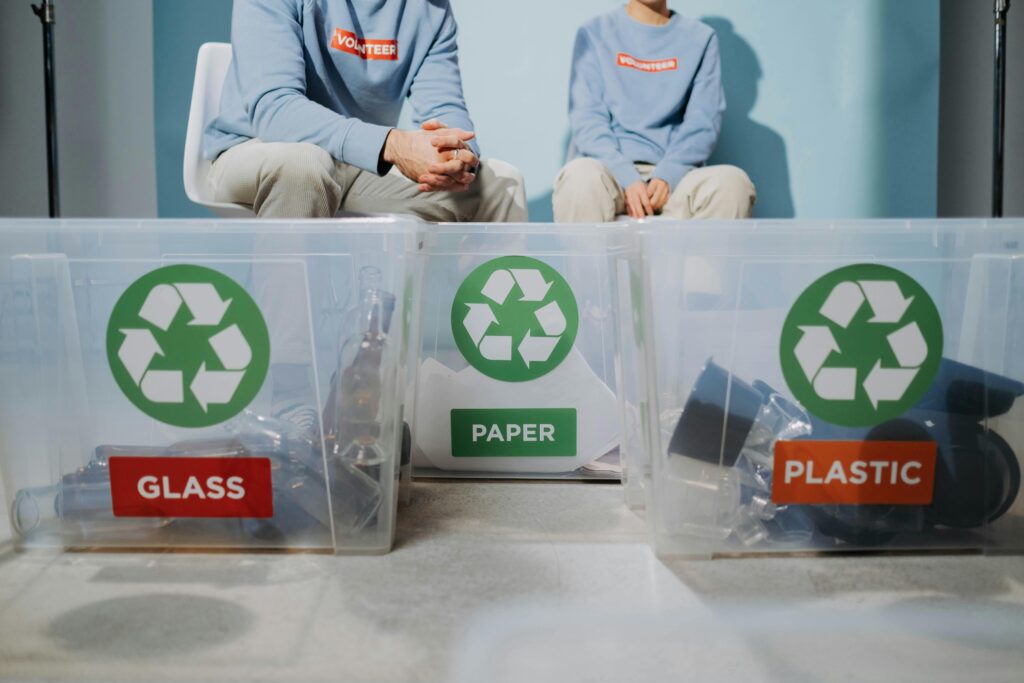
The measures as part of the Government’s Simpler Recycling plans will boost flatlining recycling rates, reduce the amount of waste sent to landfill or for incineration, and deliver cost savings for some businesses, while replacing previous legislation which could have required them to have up to six bins.
From Monday 31st March 2025, workplaces with 10 or more employees will need to arrange for the collection of the following:
- dry recyclable materials – including plastic, metal, glass, and paper and card
- food waste
- residual (non-recyclable) waste
Workplaces will need to separate paper and card from the other dry recyclables unless their waste collector collects them together. They will also have the freedom to decide on the size of containers and frequency of collections based on the volume of waste they produce.
Workplaces that must follow these rules
Any business or workplace premises that generates waste that is similar in nature and composition to household waste must follow these rules across their operations (including for example, staff kitchens). This includes all relevant non-domestic premises, such as:
- offices
- retail and wholesale
- transport and storage
- hospitality, such as cafes, restaurants, and hotels
- places of education, such as schools, colleges, and universities
- healthcare places, such as GP surgeries and hospitals
- care homes
- charities and those registered as charities
- places of worship
- penal institutes
- charity shops selling donated goods that came from a domestic property
- residential hostels that provide accommodation to people with no other permanent address or who are unable to live at their permanent address only
- premises used only or mainly for public meetings
This is not a complete list and there are others. If you are unsure if the rules apply to your business, you can check the legislation.
Simplifying the approach will mean more high-quality recycled material can be sourced domestically, which can then be used by manufacturers to make new products as part of the transition to a more circular economy.
This will reduce carbon emissions, cut environmental and societal impacts from waste disposal, and support growth of the UK reprocessing industry.
Steve Molyneux, Deputy Director of Waste and Resources Regulation at the Environment Agency, said:
“The implementation of Simpler Recycling for workplaces is a pivotal moment and a huge step forward, driving change in the waste market, optimising the use of our precious resources, and contributing to a circular economy.”
Workplaces with fewer than 10 employees have until 31st March 2027 to arrange for the recycling of the core recyclable waste streams.
Alongside extended producer responsibility for packaging and the deposit return scheme for drinks containers, Simpler Recycling in England is estimated to deliver greenhouse gas emissions savings equivalent to £11.8 billion and make a significant contribution towards meeting the ambition to recycle 65% of municipal waste by 2035.
You can find full details on Simpler Recycling (workplace recycling) here.
Photo by cottonbro studio