Longer lorries will be introduced to Great Britain’s (GB’s) roads to support the government’s priority to grow the economy, boost productivity, slash road emissions and support supply chains.
Legislation will be laid today (10 May 2023) to safely roll out the vehicles on roads from 31 May. The longer lorries will be able to transport fast-moving consumer goods and retail products, as well as waste packaging, parcels and pallets.
These new lorries will move the same volume of goods, but will use 8% fewer journeys than current trailers. This will generate an expected £1.4 billion in economic benefits and take one standard-size trailer off the road for every 12 trips.
As part of efforts to grow the economy and cut emissions, government is changing regulations to allow longer trailers on GB roads, which it estimates will save 70,000 tonnes of carbon dioxide from being released into the atmosphere.
These longer trailers, known as longer semi-trailers (LST) measure up to 2.05 metres longer than a standard semi-trailer and can be towed by a lorry.
The move follows an 11-year trial to ensure LSTs are used safely on roads, and operators will be encouraged to put extra safety checks and training in place. The trial demonstrated that LSTs were involved in around 61% fewer personal injury collisions than conventional lorries.
Vehicles which use LSTs will be subject to the same 44 tonne weight limit as those using standard trailers. These new vehicles are also expected to cause less wear on the roads than conventional lorries due to the type of steering axle used.
Operators will be legally required to ensure appropriate route plans and risk assessments are made to take the unique specifications of LSTs into account.
In addition to these new legal requirements, operators will also be expected to put in place extra safety checks including driver training and scheduling, record keeping, training for transport managers and key staff, and loading of LSTs.
It is expected that LSTs will create almost £1.4 billion in net economic benefits by ensuring more goods are carried on fewer vehicles, supporting productivity and boosting the economy.
With over 300 companies in the UK having already taken part in the trial, and almost 3,000 on the road, some of the biggest brands will be rolling out the extended use of these longer semi-trailers.
The trial revealed the important environmental benefits associated with the introduction of LSTs, including a considerable reduction of 70,000 tonnes of CO2 and 97 tonnes of NOx over the trial.
The average CO2 reduction across the lifetime of the trial is similar to the amount of CO2 captured by roughly 11,600 acres of forest per year.
The savings in NOx emissions averages to the entire annual NOx emissions of around 2,000 diesel cars per year.
Introducing LSTs is an important, easy and affordable measure to continue to reduce CO2 emissions from the haulage industry without significant technological and infrastructure development, as the government continues to work closely with the sector to ensure all new heavy goods vehicles (HGVs) are net-zero by 2040.
The move is part of the government’s comprehensive 33 actions to address the shortage of HGV drivers and boost recruitment and retention.

Government’s 33 actions to support Britain’s haulage sector include:
- £52.5 million will be given to improve roadside facilities for lorry drivers
- making 11,000 HGV driver training places available through skills bootcamps
- boosting the number of HGV driver tests
- launching our Future of Freight plan to encourage millions of people to kickstart an exciting career in logistics
As a result, new HGV drivers are taking and passing their driving test in record numbers.
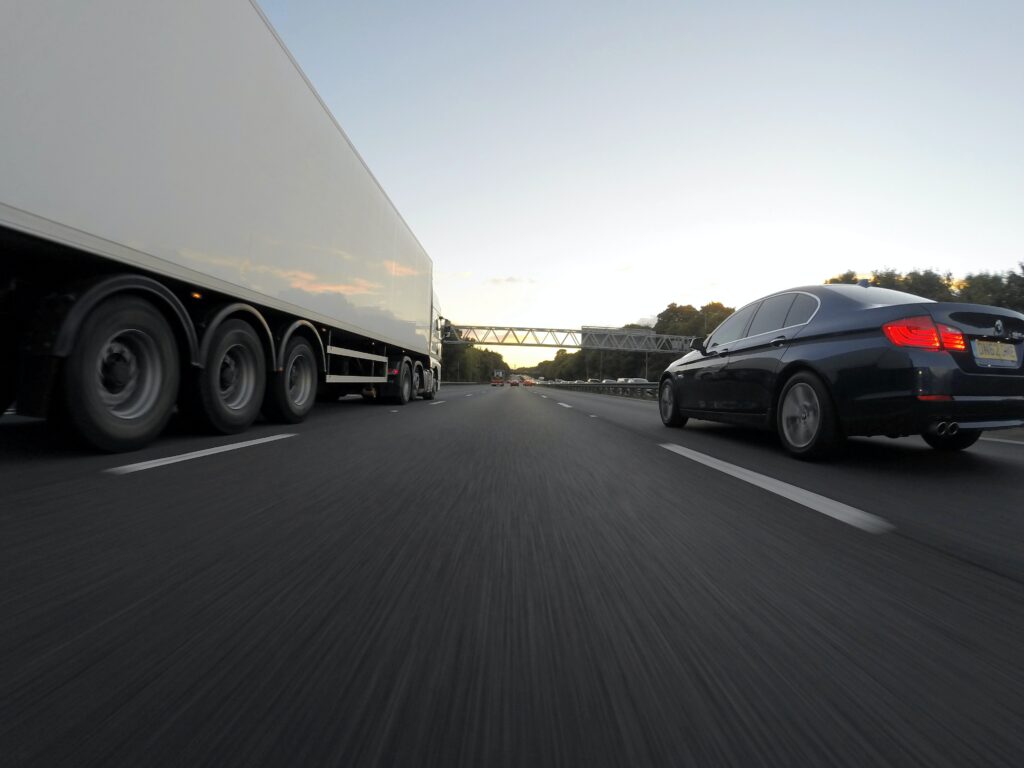
Photo by Mike Bird